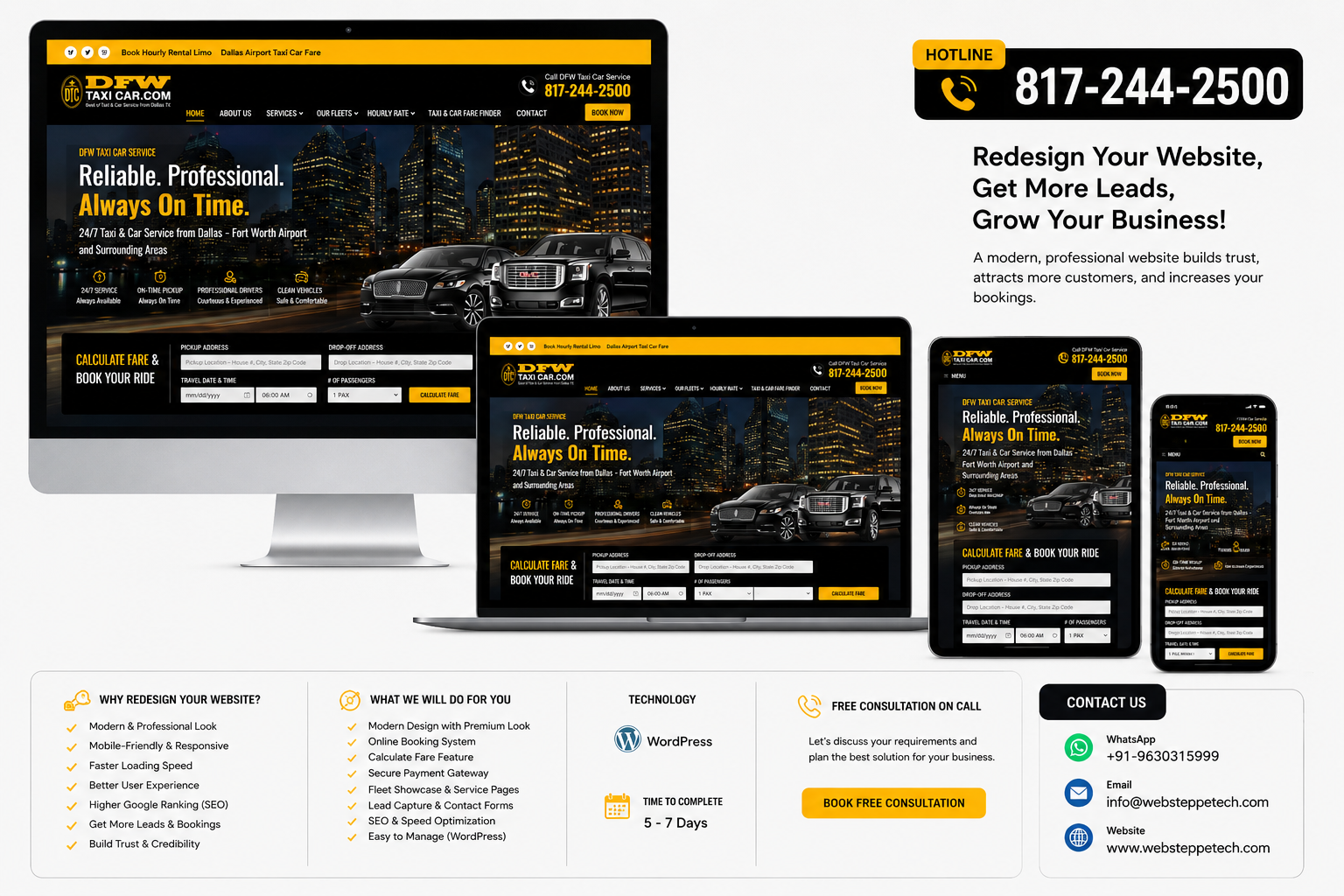
Your website is often the first impression potential customers have of your business. While having a website is essential, having an outdated website can hurt your credibility, user experience, and sales.
Technology, design trends, and customer expectations continue to evolve. A website that looked modern just a few years ago may now appear outdated and fail to deliver the results your business needs. That’s why website redesign has become an important investment for businesses looking to stay competitive online.
What is a Website Redesign?
A website redesign involves updating the appearance, structure, functionality, and user experience of an existing website. The goal is not just to make the website look better but also to improve performance, usability, search engine rankings, and conversion rates.
A redesign can range from visual improvements to a complete rebuild with new features and technologies.
Signs Your Website Needs a Redesign
1. Outdated Design
If your website looks old compared to your competitors, visitors may question the professionalism and reliability of your business.
Modern websites focus on clean layouts, mobile responsiveness, fast loading speeds, and user-friendly navigation.
2. Poor Mobile Experience
More than half of website traffic comes from mobile devices. If your website doesn’t display properly on smartphones and tablets, you’re likely losing potential customers.
3. Slow Loading Speed
Users expect websites to load quickly. A slow website increases bounce rates and negatively impacts search engine rankings.
4. Low Conversion Rates
If visitors are coming to your website but not contacting you, filling out forms, or making purchases, the design and user experience may be creating barriers.
5. Difficult Content Management
Older websites can be difficult to update and maintain. A redesign often includes moving to a modern content management system that makes updates easier and faster.
6. Poor Search Engine Rankings
Search engines prioritize websites that offer excellent user experiences, mobile responsiveness, and fast performance. An outdated website can limit your SEO success.
Benefits of Website Redesign
Improved User Experience
A redesigned website makes it easier for visitors to find information, navigate pages, and complete desired actions.
Better Mobile Responsiveness
Modern websites automatically adapt to different screen sizes, providing a seamless experience across all devices.
Increased Conversion Rates
Strategic placement of call-to-action buttons, optimized landing pages, and simplified navigation can significantly improve lead generation and sales.
Enhanced Brand Image
A modern, professional website helps build trust and strengthens your brand identity.
Faster Website Performance
Optimized coding, image compression, and improved hosting infrastructure contribute to faster loading speeds.
Stronger SEO Results
A redesign allows businesses to implement SEO best practices, helping improve search visibility and attract more organic traffic.
Essential Elements of a Modern Website Redesign
Responsive Design
Your website should function perfectly on desktops, tablets, and smartphones.
Clear Navigation
Visitors should be able to find information quickly without confusion.
Fast Loading Times
Every second matters. Faster websites improve user satisfaction and conversions.
Strong Call-to-Actions
Guide visitors toward desired actions such as requesting a quote, scheduling a consultation, or making a purchase.
Search Engine Optimization
SEO-friendly page structures, optimized content, and technical improvements help increase visibility in search results.
Security Enhancements
Modern websites should include SSL certificates, security updates, and protection against cyber threats.
Website Redesign vs Website Refresh
| Website Refresh | Website Redesign |
|---|---|
| Minor visual updates | Complete transformation |
| Limited functionality changes | Major functionality improvements |
| Faster implementation | More strategic process |
| Lower investment | Higher long-term value |
| Cosmetic improvements | Performance and business improvements |
The Website Redesign Process
- Website Audit and Analysis
- Define Business Goals
- Research Competitors
- Create New Design Concepts
- Improve User Experience (UX)
- Optimize for SEO
- Develop and Test Website
- Launch and Monitor Performance
Why Website Redesign is an Investment, Not an Expense
Many businesses delay redesigning their website because they view it as a cost. However, a modern website can generate more leads, improve customer trust, increase sales, and strengthen brand credibility.
A well-designed website works as a 24/7 marketing and sales tool that continuously supports business growth.
Conclusion
Your website should evolve alongside your business. If your current website feels outdated, performs poorly, or fails to generate results, a redesign may be the solution.
Investing in a modern website redesign can improve user experience, boost search rankings, increase conversions, and help your business stay ahead of the competition in today’s digital marketplace.